Wednesday, July 13, 2016

Video Platforms, the Essential Storytelling Tool, Are Ever Evolving

Blab
Spreecast sent a notice to all of its users that it is closing its doors this month of July, and Blab's most avid users are leaving the platform. These are two interactive live-stream video platforms set up for talk TV. Both similar in that you could have four people on the broadcast in one screen. Both shareable through Facebook and Twitter before, during, and after from inside a broadcast. Both great at building interactive communities, where users meet up on other platforms to engage.

The fate of these and other platforms that have gone before them represent the one true thing about the Internet: everything is evolving and few things are a sure thing.

That said, the video platform is an essential storytelling tool and a must-have for the transmedia toolbox. A webcam is all that is required, whether it is an external or from a laptop, desktop, or mobile device. Point and shoot or get a bit more productive with annotations and creative editing. Make movie and book trailers, let your characters take the audience deep inside the story, interview people who work behind the scenes. Video is where it is at. People tend to be more inclined to consume a video over sifting through a website or reading a blog. No matter what your project or business is, chances are you can use video to your advantage.

The big enchilada and the queen of all queens is YouTube. While it is indelibly linked to Google Hangouts and Google+, there have been many changes that I'm still trying to figure out, but setting up a YouTube Live Stream event cuts out the middleman Google Hangouts on Air, even though they still connect with each other.

The best way to figure out a platform is to just do it. Play around with it and worst-case scenario you can always delete the video if you hate it that much.

Besides YouTube, there are several other platforms for video that can be used in lieu of, in conjunction, or mirrored.

No matter what platform you decide to try, download the MP4 of your content so you have a backup of it, just in case. I have downloaded some Periscope, Facebook Live, and Blab videos and posted them to YouTube. Personally, I now choose only to use video platforms that allow me to download and be able to keep my own content.

The following are some of the many choices for video platforms. They each have their own audience, so you can never assume a video can be one size fits all.

Maker TV requires a minimum monthly viewership before you can be accepted to the site, but once you are, there is an opportunity to grow your YouTube channel.

Vimeo is used by a lot of filmmakers and music artists. The platform only allows original material that you played a role in creating and hold the copyright to.

Facebook Live is a live streaming option from your Facebook page. In Canada, so far you can't use it from your personal page. There is an icon that shows up in the post options that allows you to post instant videos.

Dailymotion has a copyright filtering system that will flag anything you try to upload that isn't your own.

Vine videos are six-second shorts that can only be posted from a compatible mobile device.

Instagram videos can be a minute or less, and must also be posted from a compatible mobile device.

UStream is one of the first interactive live-streaming video platforms on the market and is still kicking.

Twitch is a popular live streaming platform for the gaming community.

Periscope is a live streaming mobile app owned by Twitter.

YouNow is a live streaming video chat platform that has a younger participating membership.

Now get filming and have fun!

Wednesday, July 6, 2016

The Creatures of Yes


Brooklyn's Puppeteer Jacob Graham has come up with a brilliant video series called The Creatures of Yes. It's a show about puppets discovering things for the first time and learning to interact. No, it's not a knockoff from Sesame Street. It's a 1970's flavored puppet show brought to a streaming video platform. It's simple, vintage, and delightful. This Vice review offers a good overview.

Besides its YouTube channel, there is a website: creaturesofyes.com that gives you that 1970s vintage feel. (Oh my God, is 1970s considered vintage?!)

On the Instagram channel, you can see how Graham has carved a niche for himself using liquid lights, lasers, and analog synthesizers.

So as we look at the collective platforms The Creatures of Yes appear on, each intertwine with each other, but many of the posts tell a different story, and collectively, they make up the sum of the whole. That's transmedia in action.

Wednesday, June 29, 2016

How to Use a Podcast as a Transmedia Platform


You have a story that centers around a screenplay. That script may turn into a movie, a play, or even a podcast.

Maybe the story is a movie, that can be turned into a book, that can be turned into Vine vignettes or YouTube clips. The podcast may flush out the story even further, but how?

First, let's visit the concept of a podcast. The Wikipedia definition is this, "A podcast is a form of digital media that consists of an episodic series of audio, video, digital radio, PDF, or ePub files subscribed to and downloaded automatically through web syndication or streamed online to a computer or mobile device."

There are numerous host sites where you can house your podcast. The best thing to do is research them and find out which format you like the most. SoundCloud, Podomatic, and PodBean are just a handful of venues. I've used both SoundCloud and Podomatic free versions. Podomatic can also be used as an aggregate site to get your podcast onto iTunes. 

The benefit of a podcast is that you don't have to have a regimented schedule like you would need for a radio broadcast. It can be whatever you want it to be. Here are some examples for that screenplay:

  • The mechanics of writing a screenplay.
  • A stream of consciousness from one of the characters from the screenplay.
  • The writer interviews various people about different topics that are related to the screenplay.
  • A day in the life of a movie producer.
  • Behind the scenes.
  • Do's and don't's as an actor.
  • Narrating scenes in the script.

You can find more podcast ideas here and some unique ideas here.

Wednesday, June 22, 2016

Turning Your Book Into a Transmedia Project


The publishing industry. It still creates the dream of having a book in hand, but we can also just do it ourselves. Even so, a book isn't going to miraculously make you famous or rich just because it's done. Ask any author, even a bestselling one.

Nope. A book is only the beginning. Now that you're published, what are YOU going to do to get eyeballs inside the covers?

Face it. Nobody collects books because of who published them (unless they're Whitman Publishing vault books; those are works of art). They collect books for a) subject matter and b) who authored them. Can anyone really recall without looking who published Stephen King's last book? Yea, me neither.

Even if a publisher forks out the dough to design, print, and distribute your book, the onus is still on the author to sell it. The publisher's marketing efforts are pretty limited, so an author has to be invested in his or her book.

Today, the transmedia tools are at your fingertips. Don't look at the book. Look at the STORY. Look at the topics, the characters, the things that make the words worthwhile to read.

Even if you don't have a proper video camera, if you have a smartphone, tablet, or a webcam on your computer, create your own trailer. YouTube is full of book trailers. Just search out some that seem feasible for your skill set.

Do you have a compelling lead character? Maybe a female Captain America? Bam! Facebook page and write your posts as if they are being written by that character. Or maybe your book is non-fiction and helps people use alternative methods to fight tooth decay. Boom! Facebook page on How to Fight Tooth Decay Without Seeing a Dentist.

Is your topic, character visual? Start an Instagram and/or Pinterest account. Blog about the tooth decay tips that are in your book and take it further with more up to date information. Use Blogger, like this one you are reading. It's free. You can dress it up and customize it, and it is linked to Google, the largest search engine in the world. So make sure you also do a kick ass bio with links.

There are many things you can do to move your characters and book message around the web. The key is to make sure the storytelling is unique to each of the platforms you use.

How to turn a book into an entertainment franchise. 


Wednesday, June 15, 2016

Transmedia Incubators


There is nothing like a group of creatives sitting together hatching ideas. One person can be very astute on how to discover ways to push out stories and products, but when you add another equally ingenious mind, you've got what a friend of mine calls popcorn happening. The flow of clever concepts come in faster than you can write them down.

Transmedia incubators are becoming a thing, even though the term transmedia is still a puzzlement for even the more savvy social media advocates.

Schools, creative agencies, and entertainment projects are developing dedicated spaces to bring people together to kick storytelling into high gear. A hackathon for storytelling, if you will.

Finding the right cocktail of platforms, ideas, branches, and media to create a transmedia campaign doesn't just happen. It takes a great deal of thought, imagination, and boldness to step beyond what might constitute as normal to push the envelope and find the ingredients to fully enthrall and excite an audience to come to, support, and share a film, book, idea, or concept.

The incubator could be a room, a virtual studio, a Google Hangout, a Skype call, conference call, or any medium that brings more than one person together physically, verbally, or virtually.

Great minds don't just think alike, they brainstorm works of transmedia art.


Wednesday, June 8, 2016

Virtual Reality Theater


It may not look pretty from the outside, but on the inside, it freaking rocks.

Virtual reality isn't a trend. It's here to stay, so entertainment companies better get used to the idea of retooling some of their storytelling to fit the VR cinemas that are popping up all over the world.

Some of you may have thought 3-D was cool, however, 360-D is much cooler. It is like experiencing the story from the inside.

While VR may change the way cinemas are built, it likely won't replace the movie theater as we know it. Retrofitting a room for this type of viewing won't be too expensive, but it's still not that cheap to convert the movies. But what this technology has done is opened up the creative playing field to stretch the boundaries of storytelling, to make the audience a part of the story first-hand.

Vivid VR is scheduled to open on July 16. It is going to be the first virtual reality theater in North America.

The entertainment industry is slowly adapting and creating VR content, but it will be some time before a VR full-length feature film is considered mainstream.

I predict that we will see this platform evolve a lot more by then. Eventually, there won't be a need for those dumb-looking glasses.

Wednesday, June 1, 2016

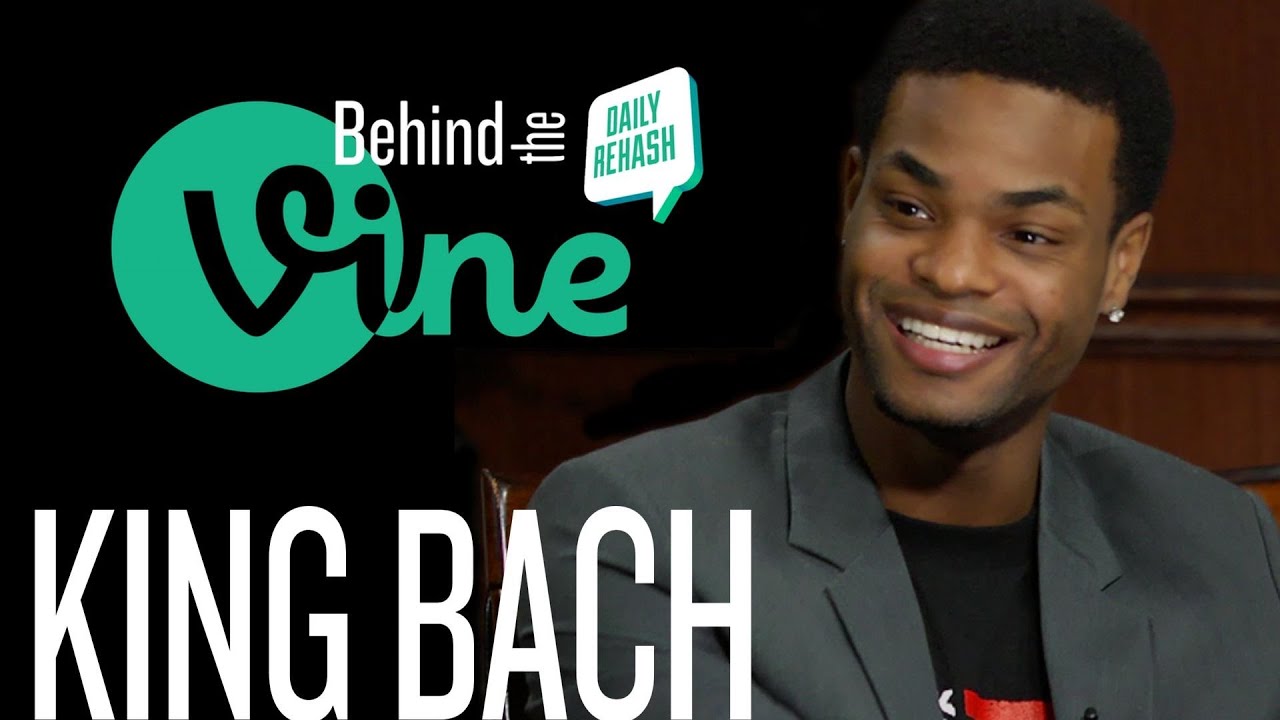
King Bach Proves You Can Pluck a Career off the Vine


This guy.

Forget that he was ranked one of the top 15 high jumpers in the NCAA. Wait? Is that a thing? It is his video media that really warrants a second look, or a third or fourth.

He has over 15.6 followers on Vine and over 840,000 followers on YouTube.

When Andrew Bachelor, aka King Bach, appeared as a guest on The Daily Show with Trevor Noah, he created his own media because he wasn't getting the parts he wanted as an actor.